


Product description
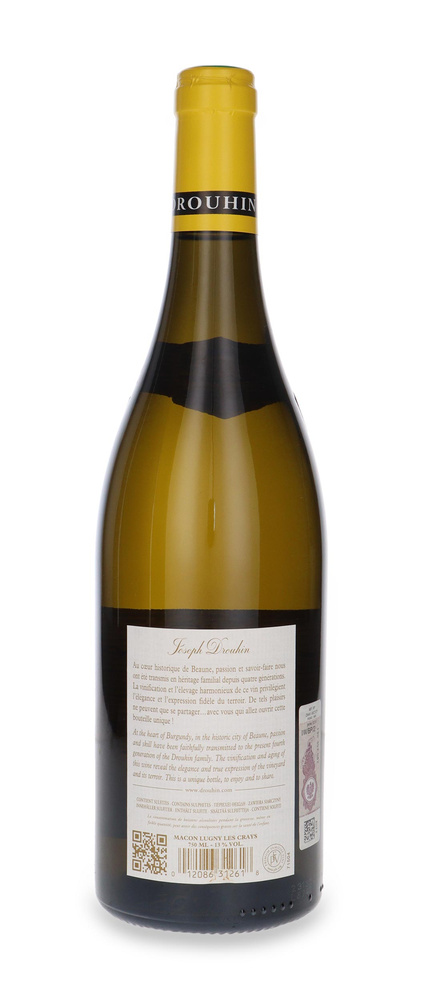
The Joseph Drouhin winery was founded in 1880 in Beaune by the young Joseph Drouhin, who—although he was originally from the Chablis region—moved his business to the capital of Burgundy to expand his wine trade and aging operations.Over time, the Drouhin family gradually acquired vineyards in various Burgundy appellations, including Chablis, Côte de Nuits, Côte de Beaune, and Côte Chalonnaise, and established a branch in Oregon (Domaine Drouhin) in 1988.Name Drouhin-Vaudon is associated with the historic Vaudon estate—a watermill (“Moulin de Vaudon”) located on the Serein River, in the heart of the Chablis vineyards owned by the Drouhin family.The location of the vineyards in the Vauvillien Valley, between the Premier Cru Montée de Tonnerre and Mont de Milieu, allows Drouhin-Vaudon’s wines to benefit from the limestone soil typical of Chablis —particularly the Kimmeridgian layers rich in marine microfossils, which impart their characteristic minerality.The Drouhins were pioneers of organic and biodynamic viticulture—since the 1980s.In the 20th century, they adopted organic farming practices, and since the 1990s.fully biodynamic in their own vineyards, focusing on minimal intervention and a faithful reflection of the terroir.
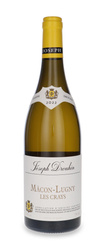
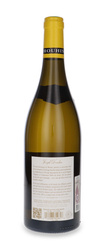
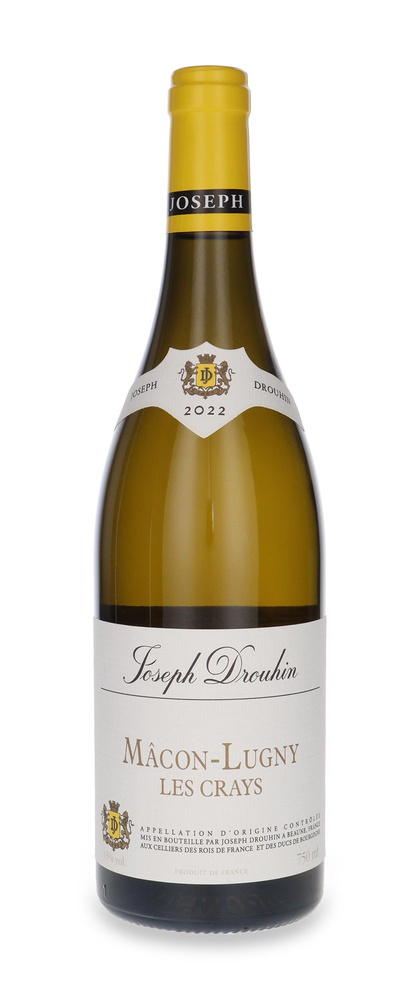
This wine is made from the Chardonnay grape variety , grown on the “Les Crays” vineyard in the Mâcon-Lugny appellation, located in southern Burgundy.On this parcel, the height is about.300 m above sea level.p.m., west-facing, which helps keep produce fresh even in warmer climates.Some of the must ferments in steel tanks (2/3), and some (1/3) in barrels with a capacity of approx..500 liters, after which the wine is aged for 6–10 months using a combination of methods.It stands out for its balance between the fruit’s ripeness and its mineral structure, with a delicate hint of salt—it conveys the terroir of this plot and the Drouhin style, which emphasizes the distinct character of the vineyard’s location.
Appearance
In the glass, the wine appears light, with a luminous color and delicate golden highlights.Clarity and brilliance indicate careful clarification and stability.
Aroma
On the nose, there are notes of white flowers, peach, and subtle citrus accents.In addition, you can detect minerality as well as a slight “salty” note.
Flavor
On the palate, the wine is fresh, with good acidity, full fruitiness, and a distinct structure.The finish is characterized by minerality and a slight “salty aftertaste,” which adds to its character.
Culinary Pairings
This wine pairs perfectly with light dishes: salads, raw or grilled fish, and vegetable tempura. It also pairs well with roasted poultry, stir-fried vegetables, and goat cheese.