


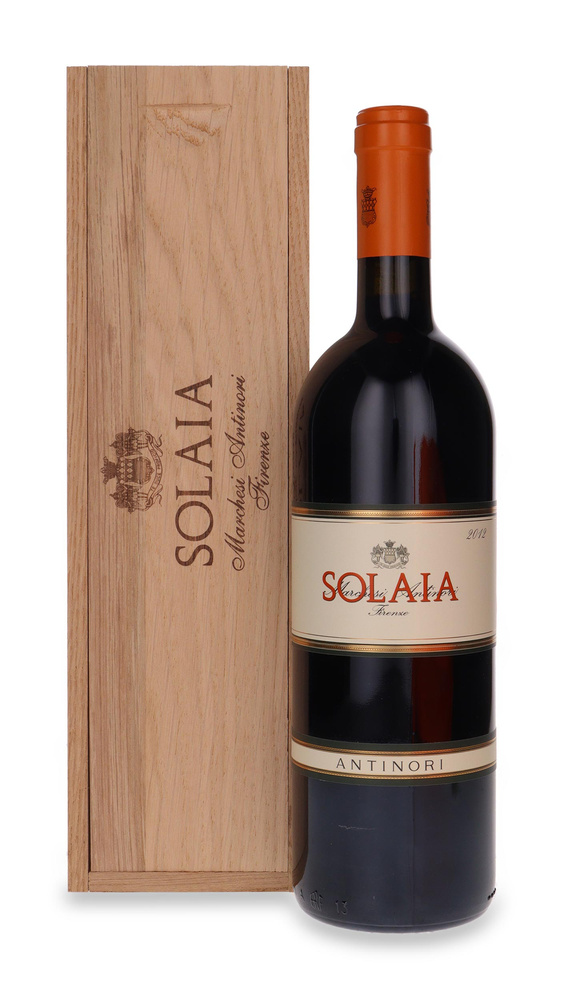
Product description
The vineyard where the 2012 Solaia wine is produced has its roots in the prestigious Tenuta Tignanello estate, owned by the famous Marchesi Antinori family.The winery of that name (“Solaia”—from the Italian word. , meaning “sun”) was formed on a unique ridge of the southwestern slopes, at an elevation of approximately 350–400 m above sea level.p.m.(1,150–1,325 feet), on soil rich in hard “alberese” limestone and brittle, calcareous-clay “galestro”.The first vintage of Solai dates back to 1978, when the Antinori family decided to use the best plots of the Tignanello vineyard, which had an ideal exposure for Bordeaux red grape varieties.The vineyard was used only in exceptional vintages—in some years, no wine was produced at all.
Character of the site and terroir: a steep, southwest-facing slope provides extended sun exposure, which, combined with stony soil, promotes the ripening of grapes with a robust structure.In the 2012 vintage, conditions were challenging: a cooler spring, followed by a scorching summer with a long period of drought, and rains in late August and throughout September and October allowed the grapes to fully ripen.
The winemaking process and grape selection: In 2012, the harvest took place between September 25 and October 10; the selection process was rigorous—the grapes were harvested by hand, vine by vine, and then the berries underwent a thorough selection process in the cellar’s sorting rooms
The production of this wine was therefore the result of meticulous care—from the vines, through the selection of the grapes, to fermentation and aging—which places Solaia among the icons of Italian winemaking and the classic Super Tuscans.
Wine Solaia 2012 is made from the following grape varieties: Cabernet Sauvignon, Cabernet Franc, and Sangiovese.Specifically, in this vintage, Cabernet Sauvignon (about 75%), Cabernet Franc (about 20%), and Sangiovese (about 5%) play the dominant roles..
Appearance: In the glass, it displays an intense ruby color with purple highlights.
Aroma: The aroma develops into notes of ripe black fruits (plum, black currant), accompanied by hints of violets, graphite, white pepper, and spices, as well as a subtle mineral note derived from the terroir.
Taste: On the palate, the wine maintains an excellent balance between acidity and tannins—the tannins are pronounced yet smooth, the structure is full-bodied, and the fruit is robust but not overpowering.The finish is long and complex, with notes of cedar, tobacco, and a hint of mint.
Food Pairings: This wine pairs perfectly with gourmet dishes: roasted beef tenderloin or game in sauce, aged cheeses (e.g., pecorino, Parmigiano Reggiano), as well as with a complex Italian dish—such as venison ragù served with pappardelle pasta.