

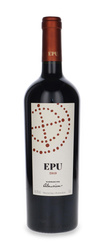
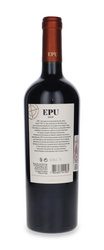
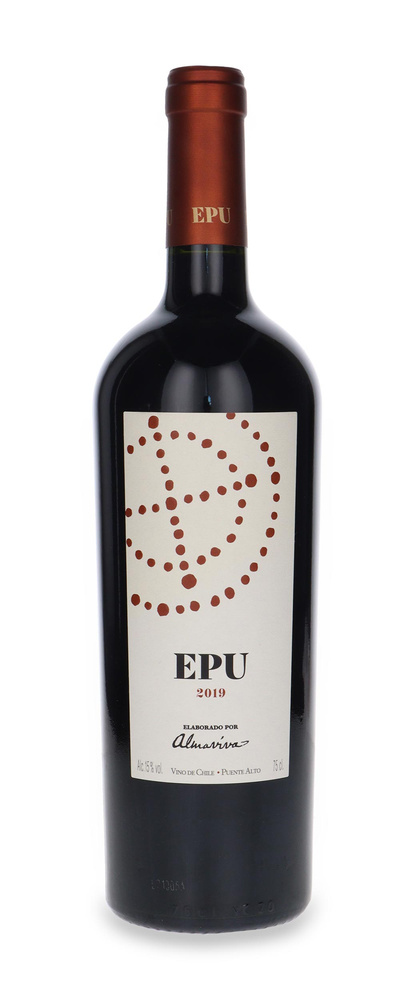
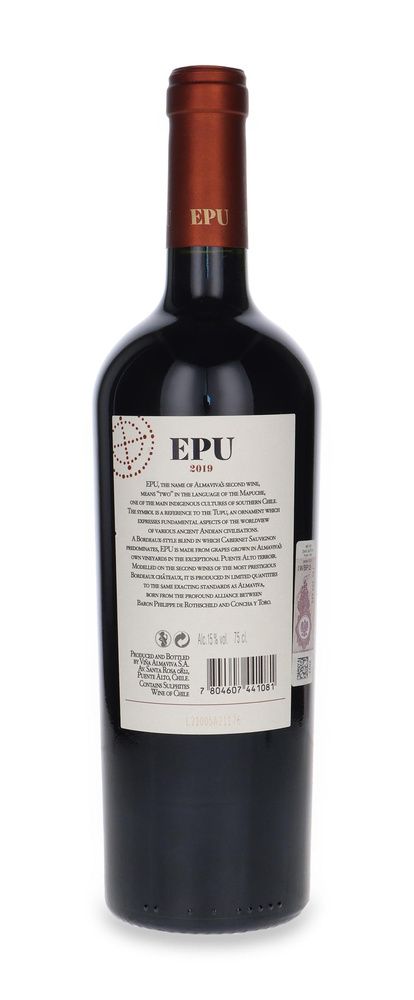
Almaviva EPU 2019 / 15% / 0.75 L
- EPU 2019 captures the essence of Puente Alto in a more approachable, silky style—an elegant, taut, and contemporary Bordeaux-style blend with Chilean energy. Thanks to the predominance of Cabernet and one year of aging in used oak, it retains the crystal-
Product description
Almaviva was born out of a rare alliance between two worlds: the French Rothschild family (Baron Philippe de Rothschild) and the Chilean giant Concha y Toro.In 1997, they decided to establish a “château-style winery” in Chile, where a single terroir, a single winery, and a single philosophy guide the wine from vine to bottle.At the heart of the project is Puente Alto in the Upper Maipo Valley—a cooler, high-altitude region at the foot of the Andes, renowned for its Bordeaux-style Cabernets.It is here, on poor, stony, gravellyalluvial soils with a clayey topsoil and boulders deep in the subsoil—do the vines take deep root, producing dense, elegant, and mineral-driven wines.
"EPU" is Almaviva's second wine—the name means "two" in the Mapuche language, a reference both to the wine's status and to the meeting of two cultures.EPU is made from the same vineyards in Puente Alto, but from a selection focused on early drinkability and a silky texture; it is often aged in barrels previously used for the estate’s first wine to emphasize the freshness of the fruit over oak-driven opulence.The symbol on the label refers to the Andean “tupu”—an ornament with cosmological significance.
The 2019 vintage in Maipo was warm and dry, with a long, uneventful harvest; the 2019 EPU was dominated by Cabernet Sauvignon (84%), complemented by Carménère (13%), Merlot (2%), and Cabernet Franc (1%).The wine aged for about.Aged for 12 months in French oak barrels, mostly second-fill, which gave it a refined character without an overpowering vanilla flavor.As a “beautiful second wine,” it was highly praised by critics and entered international distribution through La Place de Bordeaux.
Appearance: a deep, intense ruby color with a vivid purple hue at the rim.
Aroma: black currants and blackberries intertwine with wild raspberries, tea leaves, dried herbs, and a subtle hint of spices and black currant leaves; in the background, a subtle note of vanilla and barrel-aged tea cedar.
Taste: The attack is smooth and supple, with a linear, “Bordeaux-style” structure; sweet-dry, polished tannins, fresh, mineral acidity, and a long, juicy finish where forest fruits meet a delicate spiciness.
Food pairings: beef entrecôte or tenderloin with pepper sauce, lamb with rosemary, roasted duck with cherries, rabbit in red wine; vegetarian options—grilled portobello mushrooms with a red wine reduction, polenta with aged cheese, eggplant with harissa.