

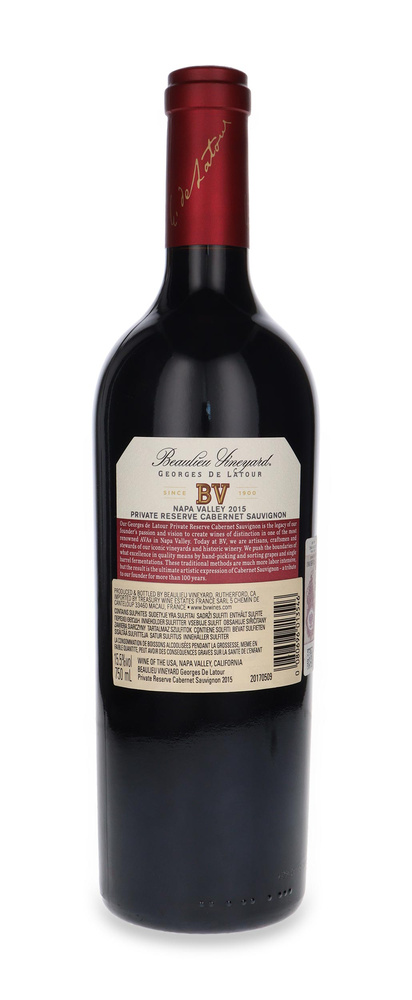
Product description
Winery Beaulieu Vineyard, located in the Rutherford AVA in California’s Napa Valley, has a long and prestigious history —it began in 1900, when French chemist and visionary Georges de Latour, along with his wife Fernande, purchased the original four acres of land on the western slope of Rutherford.
It owes its name, “Beaulieu” (“beautiful place”), to a comment by Fernande, who exclaimed, “Quel beau lieu!”!"upon seeing the estate".
Even back then, de Latour proved himself to be a visionary—he was one of the first in Napa Valley to import a phylloxera-resistant rootstock for grapevines, which protected his vineyard from a serious crisis in the late 19th and early 20th centuries.
In the 1930s, de Latour hired the legendary winemaker André Tchelistcheff (starting in 1938), who transformed the quality of the wines and laid the groundwork for the creation of the flagship cuvée.
The winery grew rapidly—during Prohibition (1920–1933), most American wineries went bankrupt or changed their business focus, whereas Beaulieu secured a contract to supply sacramental wine to churches, which allowed it to survive and return to premium production after Prohibition was repealed.
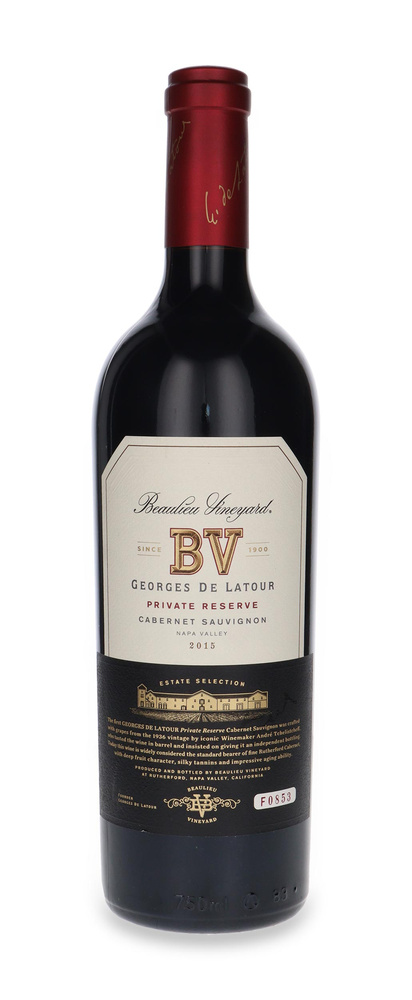
In 1940, the first official vintage of the estate’s flagship wine—named in honor of its founder, Georges de Latour Private Reserve Cabernet Sauvignon—was released; since then, it has become a true icon of Napa Valley and one of the most sought-after American wines.
The winery continues to cultivate its historic plots (BV Ranches No..1 & 2) with grapevines planted by de Latour in the early 20th century.Today, the winery is owned by Treasury Wine Estates, and its position in the premium market remains strong.
It is made from hand-selected clusters from the finest Cabernet Sauvignon vines in the BV Ranches No. plot.1 and No.2 located in the western part of the Rutherford AVA, where clay-gravel soils are conducive to the production of structured, long-aging wines.
The winemaking process involved fermentation in a combination of new French oak barrels, stainless steel tanks, and wooden fermentation vats, followed by 22 months of aging in French oak barrels (90% new)
Appearance: a deep, navy-purple color with intense saturation and a violet rim.
Aroma: initially intense notes of black currant, blackberry, and plum in liqueur, evolving into hints of graphite, damp forest, mint, and wild herbs, as well as vanilla and toasty spice resulting from oak aging.
Taste: full-bodied with a wealth of fruit—black currant, black cherry, cassis—framed by structured, elegant tannins and excellent acidity.A long, complex finish with notes of cedar, tobacco, cocoa, and a hint of Sichuan pepper.
Food pairings: It pairs perfectly with richly flavored dishes—roasted lamb with rosemary, beef steak with herb butter, venison such as roe deer with black currant jam, aged cheeses such as Comté or Manchego, as well as grilled dishes with a strong smoky flavor.